Reclaim Your Role as the
Screen Time Leader in Your Family
A FREE Screen Time Awareness Kit for parents and children ages 6–11
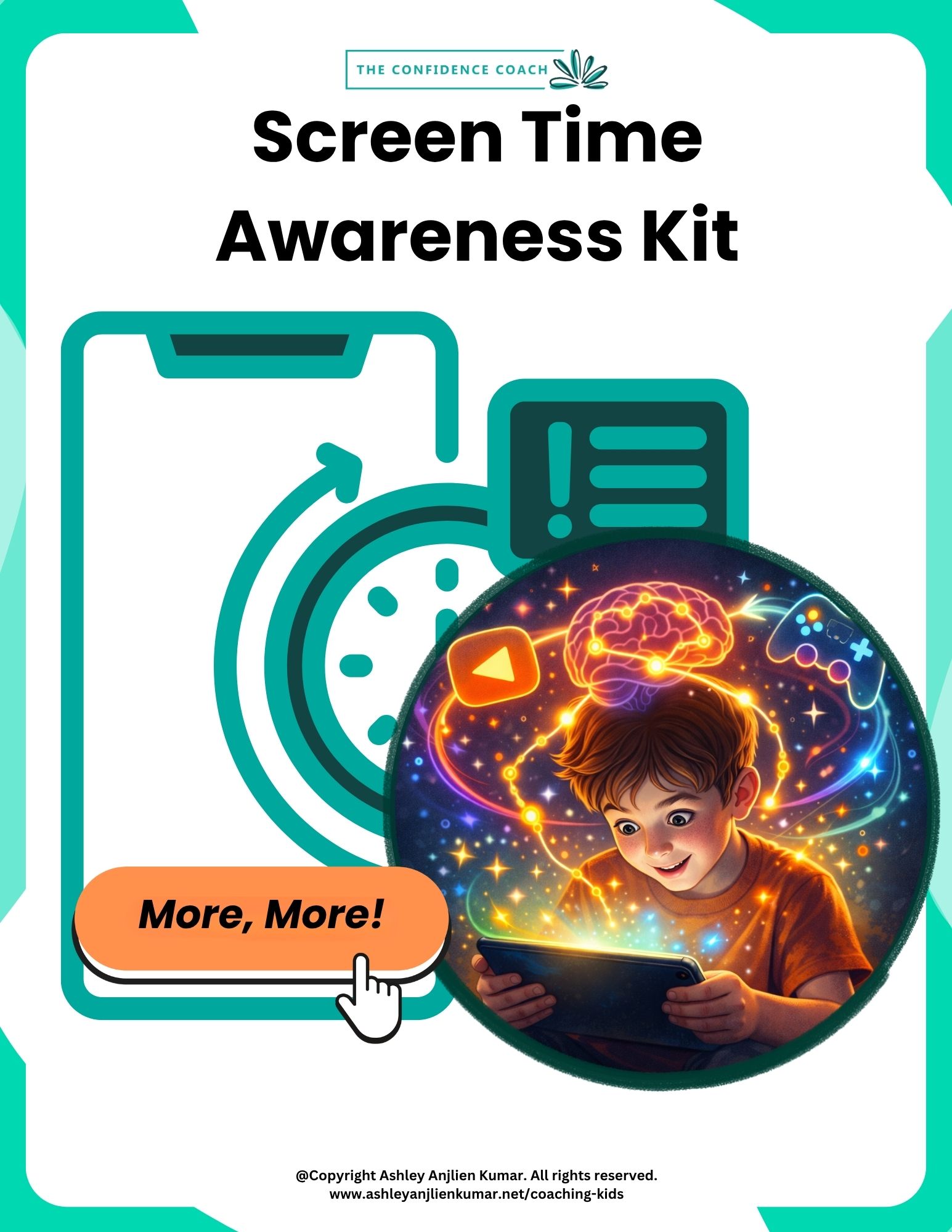
It's not just a parenting thing or a "kid-problem." Tech is built this way...
Help kids understand why screens feel so hard to stop — and how to build healthier habits together.
✔ Help kids understand what screens do to their brain
✔ Start calmer conversations about technology
✔ Reduce daily screen time battles
✔ Build self-awareness skills & responsibility
✔ Build healthier family screen routines
Most Parents Know This Moment
You tell your child their screen time is over.
And suddenly you're in a battle you never wanted to fight.
The pleading.
The negotiating.
The meltdown when you stand firm.
Many parents leave these moments wondering:
"Why is it so hard for kids to stop?"
"Am I doing something wrong?"
You're not.
What most parents don't realize is that they're competing with systems intentionally designed to capture attention.
Many apps, games, and platforms are built using decades of psychological research to keep users engaged as long as possible.
And children's developing brains are especially vulnerable to those reward systems.
This isn’t just a discipline issue.
It’s brain chemistry, design, and habit formation.
What Screens Do to Growing Brains

🧠 Dopamine Reward Loops
Games and videos trigger dopamine — the brain chemical that says “do that again.”
This makes screens feel exciting and hard to stop.

🌙 Sleep Disruption
Blue light from screens delays melatonin, the hormone that signals the brain it's time for sleep.
This can lead to children who are tired, dysregulated, and less emotionally resilient the next day.

👥 Social Development
Kids build emotional intelligence through thousands of small face-to-face interactions.
Screens can quietly replace these moments if families aren't intentional.
🎉🎉INCLUDED BONUS: TEACHER / FACILITATOR GUIDE FOR GROUP USE
A Better Way to Approach Screen Time
Most screen time advice focuses on rules and restrictions.
But rules alone often lead to power struggles.
What actually helps children make wiser choices is awareness.
When kids understand what's happening inside their brain while using screens, something powerful happens.
They begin the journey of noticing their own habits.
They start to recognize the impact on their well-being.
So it's not just about the outcome of "less screen time" but the actual process of building self-responsibility.
A parent's role shifts from constant enforcer to trusted guide.
That’s exactly what this kit helps families do.
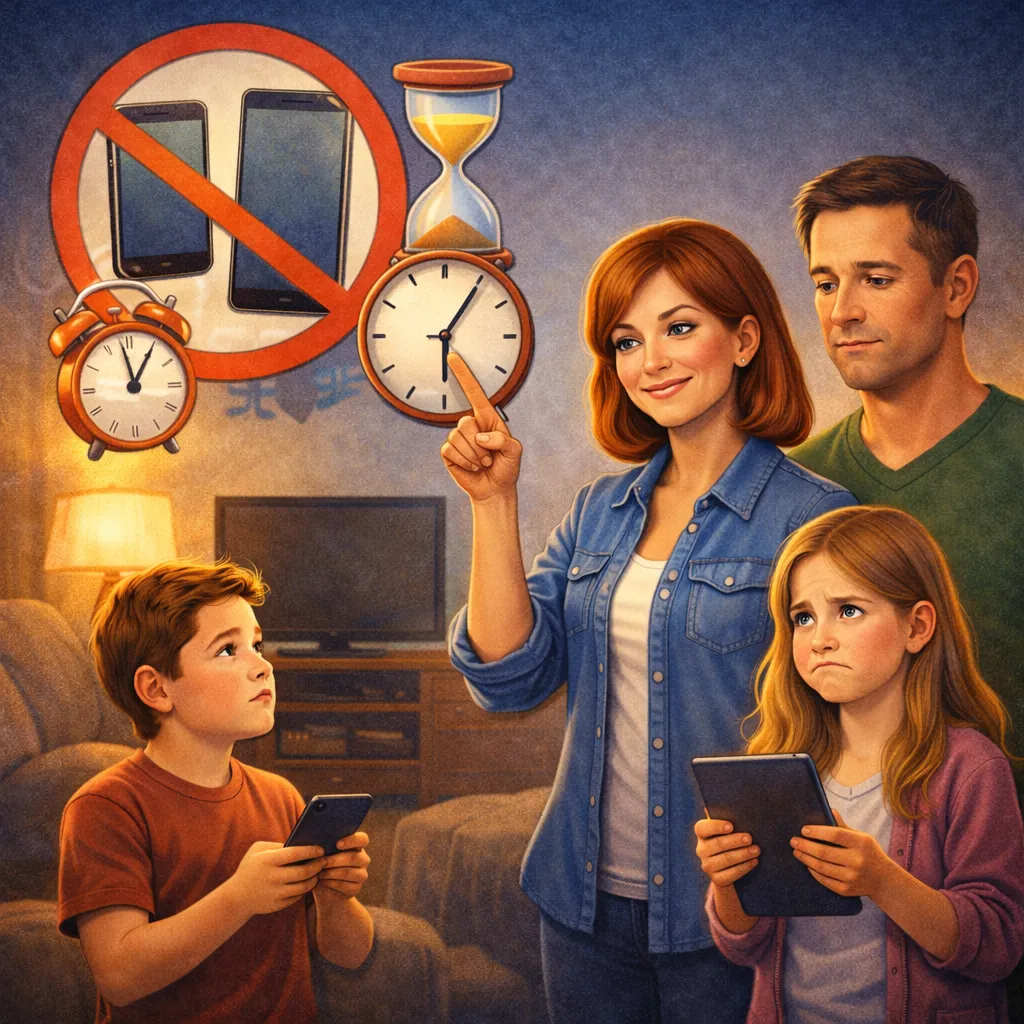
Many parents struggle with managing screen time for kids, especially when devices lead to tantrums, negotiation, or difficulty stopping. Research shows that excessive screen time can impact children’s sleep, focus, and emotional regulation. The goal isn’t to eliminate screens entirely, but to help children build healthy screen time habits through awareness, structure, and guidance.
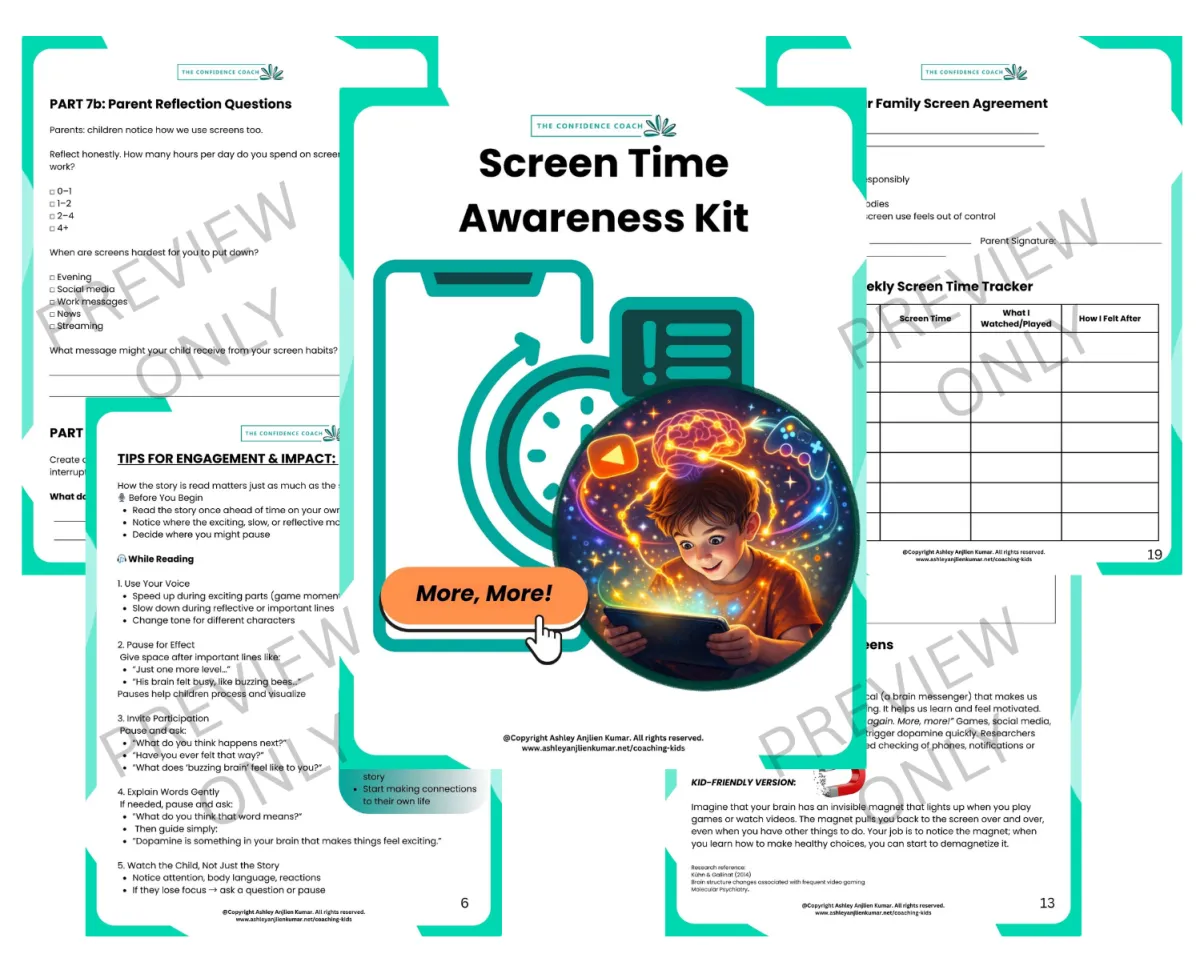
Inside the Screen Time Awareness Kit

📖 A Kid-Friendly Story
Meet Arjun and Maya as they discover why screens feel so hard to stop.

🧠 Brain Science Explained Simply
Kids learn about dopamine, focus, and sleep in language they can understand.

💬 Family Conversation Guide
Prompts that help parents and kids talk about screen habits without blame.

📊 Weekly Screen Tracker
Kids begin noticing their own patterns and how screens affect how they feel.

🎯 Screen-Free Challenge
An experiment that helps families rediscover creativity and connection.

✍️ Family Screen Agreement
Create clear, healthy screen boundaries together.
What Changes When Kids Understand Screens
Instead of:
❌ daily power struggles
❌ constant negotiating
❌ emotional meltdowns when devices turn off
Families start experiencing:
✔️ calmer conversations
✔️ children noticing their own screen habits
✔️ healthier daily routines
✔️ more play, creativity, and connection
Created by Ashley Anjlien Kumar


Master Certified Parenting Coach
Certified Kids Self-Esteem & Confidence Coach
Somatic Trauma Therapy Practitioner
Ashley helps parents raise confident, emotionally resilient children while strengthening connection inside the family.
Her work focuses on helping families build:
• emotional regulation
• self-confidence
• healthy boundaries
• conscious parenting leadership
The Screen Time Awareness Kit was created to help parents bring more awareness, structure, and leadership into their family's relationship with technology, with Ashley's deep-seated passion to protect child well-being.
Ready to Start Leading Your Family’s Screen Habits Again?
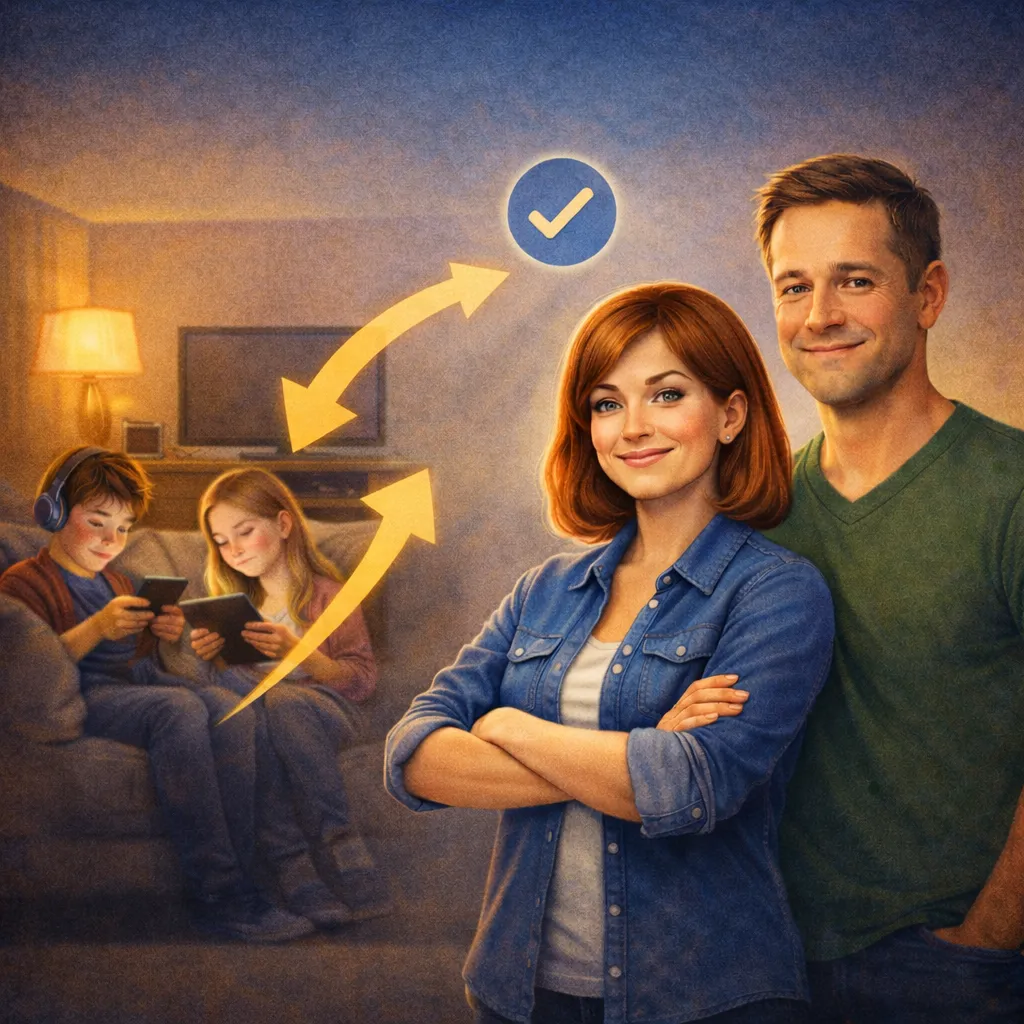
Inside the free kit you'll discover:
✔️ kid-friendly brain science
✔️ reflection exercises
✔️ family discussion tools
✔️ a weekly screen tracker
✔️ a screen-free challenge
@COPYRIGHT ASHLEY ANJLIEN KUMAR. ALL RIGHTS RESERVED | TERMS OF USE | PRIVACY POLICY